Rewind the Clock With Personalised Anti-Aging Treatments in Singapore
Aging is a natural process, but the visible signs—such as wrinkles, sagging skin, and pigmentation—can be distressing for many. At our aesthetic clinic in Singapore, we offer a wide range of non-surgical anti-aging treatments designed to refresh and rejuvenate your appearance. Whether you're noticing early signs of aging or looking for advanced solutions to restore youthful skin, our doctor-led treatments are tailored to your unique skin needs and goals.
What Causes Facial Aging?
Facial aging is the result of a combination of intrinsic (natural biological) and extrinsic (environmental and lifestyle) factors that affect the skin’s structure and function over time.
1. Collagen and Elastin Breakdown
From our mid-20s onwards, collagen production begins to decline steadily. Collagen and elastin are key structural proteins that keep the skin firm, plump, and elastic. As these proteins break down with age, the skin becomes thinner, less resilient, and more prone to wrinkles and sagging.
2. Volume Loss in Fat and Bone Structures
With age, the underlying facial fat pads shrink and shift downwards. This results in hollowing under the eyes, flatter cheeks, and deeper nasolabial folds. Bone resorption in the jawline and cheeks also contributes to facial deflation and skin laxity.
3. Sun Exposure (Photoaging)
Chronic UV exposure accelerates the aging process by damaging collagen fibres and increasing pigmentation irregularities. This is one of the most significant causes of premature aging, particularly in sun-exposed areas like the cheeks, forehead, and neck.
4. Slower Skin Cell Turnover
As we age, the rate at which skin cells regenerate decreases. This leads to a buildup of dead skin cells on the surface, causing dullness, uneven texture, and enlarged pores.
5. Lifestyle Factors
Stress, smoking, poor sleep, alcohol consumption, and an unbalanced diet can all contribute to oxidative stress and inflammation—both of which accelerate skin aging.
What Are the Signs of Facial Aging?
As we grow older, our facial skin undergoes progressive changes that reflect the natural aging process. Common signs include fine lines, wrinkles, sagging skin, volume loss, and a dull or uneven skin tone. These visible changes are often influenced by a combination of factors—such as reduced collagen production, sun exposure, genetics, and lifestyle habits like stress or smoking.
Understanding these signs of aging is the first step in choosing the right anti-aging treatment. In this article, we explore the key facial aging changes and discuss how evidence-based, non-surgical treatments in Singapore can help restore a more youthful appearance.
Fine Lines and Wrinkles
Fine lines and wrinkles are often the earliest and most visible signs of facial aging. These creases typically begin as subtle expression lines around the eyes (crow’s feet), forehead, and mouth, gradually deepening into more permanent wrinkles over time.
The primary cause is the gradual decline in collagen and elastin production, which begins as early as our mid-20s. These structural proteins are essential for maintaining the skin’s firmness and elasticity. As their levels drop, the skin becomes thinner, less resilient, and more prone to creasing.
In addition to natural aging, external factors such as sun exposure, smoking, chronic stress, and repetitive facial movements accelerate the breakdown of skin support structures. Over time, this leads to the formation of both static wrinkles (visible at rest) and dynamic wrinkles (visible with facial expressions).
Understanding the development of wrinkles is a key step in addressing facial aging holistically. Early intervention can help preserve skin quality and delay the progression of deeper lines.
Learn more about Wrinkles here
Sagging Skin
Sagging skin is a common and progressive sign of facial aging that typically affects areas such as the cheeks, jawline, and neck. It occurs when the skin loses its structural support over time, leading to a drooping or sunken appearance.
One of the primary causes is the natural decline in collagen and elastin production. These proteins help maintain the skin's firmness and ability to bounce back. As they diminish, the skin becomes looser and less able to resist gravitational pull.
Facial volume loss also contributes significantly to sagging. With age, fat pads in the midface begin to shrink and descend, while bone resorption around the cheeks and jawline reduces skeletal support. These changes create hollowness in the upper face and heaviness in the lower face.
Environmental factors like sun exposure, smoking, and poor lifestyle habits can further accelerate the loss of skin elasticity. In some individuals, genetics also play a strong role in determining how quickly and severely sagging develops.
Learn more about Sagging Skin here
Skin Laxity and Skin Thinning
Skin laxity and thinning are closely related signs of aging that contribute to a more fragile and aged facial appearance. As the skin becomes thinner and looser, it is less able to hold its shape and contour, resulting in visible drooping and a loss of definition.
These changes occur primarily due to a reduction in collagen and elastin production. Produced by fibroblasts in the dermis, these structural proteins give the skin its strength and elasticity. With age, both the number of fibroblasts and their activity decline, leading to a weaker dermal matrix.
Thinner skin is also more vulnerable to external damage, such as from UV exposure or mechanical stress. This increases the likelihood of visible blood vessels, fine lines, and uneven texture. In areas like the under-eye region and lower cheeks, skin thinning can also reveal underlying anatomical changes such as fat loss or bone shrinkage.
Skin laxity often becomes more pronounced with age, especially in the mid to lower face, where tissue descent is influenced by gravity and volume depletion. Left unaddressed, these changes contribute to a tired or aged appearance, even in individuals who maintain good general skin health.
Pigmentation and Sun Damage
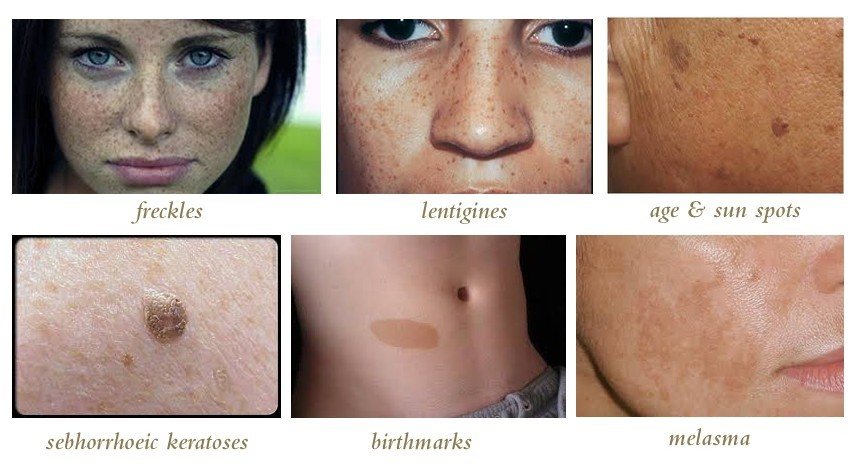
Pigmentation irregularities and sun damage are common signs of facial aging that often appear gradually over time. These changes may present as age spots, freckles, uneven skin tone, or a dull, weathered appearance—particularly in areas frequently exposed to the sun such as the cheeks, forehead, and nose.
Ultraviolet (UV) radiation is one of the most significant external contributors to premature skin aging. Repeated sun exposure causes cellular damage, accelerates collagen breakdown, and stimulates overproduction of melanin. This leads to the development of pigmentation clusters and uneven skin tone, a process commonly referred to as photoaging.
Apart from the sun, other factors such as hormonal fluctuations, genetics, and residual acne marks can also contribute to pigmentation issues. Over time, these discolorations can make the skin look older, less radiant, and harder to cover with makeup.
Unlike fine lines or sagging, pigmentation often affects the skin’s surface clarity and overall brightness—two key attributes associated with youthful skin.
Learn more about Pigmentation here
Loss of Volume
Loss of facial volume is a hallmark of aging that contributes to a tired, sunken, or hollowed appearance. It typically affects areas such as the cheeks, temples, under-eye region, and jawline, altering the natural balance and contour of the face.
As we age, the fat compartments in the face begin to shrink and shift downward. This volume depletion is accompanied by bone resorption in the midface and lower face, which reduces the structural support that once maintained a youthful, lifted look. These anatomical changes result in flatter cheeks, deepened folds, and a less defined jawline.
The reduction in facial volume not only affects facial proportions but also makes the overlying skin appear looser and more prone to sagging. This can lead to a gaunt or haggard look, even in individuals who maintain good skin texture and tone.
Volume loss is often subtle at first, but becomes more noticeable in the late 30s and beyond, making it a key concern for many individuals seeking anti-aging solutions.
Dull Skin and Loss of Radiance
A healthy, radiant complexion is often associated with youth, while dull or tired-looking skin is a subtle but common sign of aging. As we grow older, the skin’s ability to reflect light evenly diminishes, resulting in a loss of natural glow and vibrancy.
One of the key contributors is slower skin cell turnover. In youthful skin, new cells rise to the surface regularly, keeping the complexion smooth and luminous. However, with age, this renewal process slows down, leading to a buildup of dead skin cells that causes the skin to appear flat, rough, or uneven in tone.
Other contributing factors include dehydration, sun exposure, air pollution, and reduced microcirculation—all of which impair the skin’s texture and clarity over time. Lifestyle habits such as poor sleep, stress, and smoking may further worsen the appearance of dullness.
This loss of radiance is often one of the first signs patients notice in their 30s or 40s, even before deeper wrinkles or volume loss become apparent. Addressing it early can help restore a healthy glow and delay the progression of visible aging.
Dry and Dehydrated Skin
Dry or dehydrated skin is a frequently overlooked but significant sign of skin aging. As the skin matures, its ability to retain moisture diminishes, resulting in a tight, flaky, or rough texture. This lack of hydration can exaggerate the appearance of fine lines and make the skin look tired or worn.
With age, the skin produces less sebum—the natural oil that helps maintain a healthy moisture barrier. At the same time, the lipid layer in the stratum corneum becomes less efficient at locking in hydration. This disruption in the skin barrier leads to increased transepidermal water loss (TEWL), making the skin more vulnerable to dryness and irritation.
Dehydrated skin may also be linked to external stressors such as excessive air-conditioning, frequent flying, harsh skincare products, or over-cleansing. In Singapore’s humid climate, it’s not uncommon for patients to mistakenly assume their skin is oily, when in fact it is dehydrated beneath the surface.
Maintaining optimal hydration is essential not only for comfort but also for skin function. Well-hydrated skin appears smoother, plumper, and more resilient—key characteristics of a youthful complexion.
Anti Aging Treatment Options in Singapore
There is no one-size-fits-all approach to reversing the signs of aging. At our aesthetic clinic in Singapore, we offer a range of doctor-designed, evidence-based treatments tailored to address specific aging concerns such as wrinkles, sagging, skin thinning, pigmentation, and volume loss. Each treatment is carefully selected based on your skin condition, facial anatomy, and aesthetic goals to deliver natural-looking, rejuvenated results.
Wrinkle and Fine Line Reduction With Botulinum Toxin in Singapore
Botulinum toxin is a well-established injectable treatment used to reduce the appearance of dynamic wrinkles caused by repeated facial movements. It works by temporarily relaxing specific facial muscles, softening expression lines without altering natural facial expressions.
Common areas where botulinum toxin is used include:
- Frown lines between the eyebrows
- Crow’s feet around the eyes
- Horizontal forehead lines
The effect typically begins within 3 to 10 days after injection and lasts for approximately 3 to 4 months. The procedure is minimally invasive, with little to no downtime required.
This treatment is often chosen by individuals seeking to smooth out active wrinkles while maintaining a natural look. When administered by an experienced doctor, it can help preserve a youthful appearance and prevent further deepening of fine lines.
Learn more about Botulinum Toxin wrinkle treatment →
Collagen-Stimulating Options for Wrinkles and Skin Quality
In addition to botulinum toxin, collagen-boosting injectables can help improve the appearance of fine lines by reinforcing the skin’s structure from within. These include:
These treatments work by activating fibroblasts to regenerate collagen and elastin, thereby smoothing fine lines while enhancing skin hydration, density, and glow.
Treatment for Skin Laxity and Thinning in Singapore
Skin laxity and thinning are common concerns that develop as collagen and elastin levels decline with age. Injectable collagen stimulators are an effective way to rebuild dermal structure, improve firmness, and restore skin density.
Below are some of the most commonly used options at our clinic:
婴儿针 (PN-Based Injectable for Skin Repair)
This Korean-origin injectable contains polynucleotides (PN), bioactive molecules that promote tissue repair and stimulate collagen production. When injected into the dermis, it enhances skin thickness, elasticity, and overall texture. It is especially suitable for individuals with dull, sensitive, or ageing skin looking to improve firmness and skin barrier function.
Learn more about PN injectables here →
Skinboosters
Commonly known as HA Skinbooster Using NASHA™ Technology, this Swedish-Formulated stabilised hyaluronic acid (HA) injectable improves hydration from within and promotes long-term collagen regeneration. It is ideal for patients with dry, crepey, or rough skin and can be combined with other collagen stimulators for enhanced results.
Learn more about Skinboosters here →
Injectable Bio-Remodelling Moisturiser With 64mg HA (逆時針)
Also referred to as the “turn-back-time injectable,” this unique formulation contains the highest concentration of hyaluronic acid (64mg) and is designed to spread uniformly across the skin. It triggers a bioremodelling effect, improving skin elasticity, firmness, and hydration across multiple layers. Unlike conventional fillers, this injectable does not add volume but instead strengthens the skin’s support structure.
Learn more about high-HA injectable moisturiser here →
Sagging Skin Treatment in Singapore
Sagging skin occurs as collagen production slows and facial support structures weaken over time. The result is a gradual descent of the skin, especially around the cheeks, jawline, and neck. To address this, non-surgical lifting treatments that stimulate deep collagen remodelling are highly effective.
High-Intensity Focused Ultrasound (HIFU)
At our clinic, we use Ultraformer MPT, a medical-grade High-Intensity Focused Ultrasound system that delivers ultrasound energy into the deeper layers of the skin and SMAS (superficial muscular aponeurotic system). This energy generates controlled heat zones, which trigger collagen contraction and long-term collagen regeneration.
HIFU is particularly effective for:
- Lifting sagging cheeks and jowls
- Contouring the jawline and reducing heaviness in the lower face
- Tightening loose skin on the neck
As a non-invasive alternative to surgical facelifts, HIFU does not damage the skin surface and requires minimal downtime. Most patients experience gradual lifting and tightening over the following 2 to 3 months as collagen rebuilding occurs. Maintenance sessions may be recommended annually to preserve results.
Learn more about HIFU here →
Volume Loss Treatment in Singapore
Facial volume loss is a common sign of aging that contributes to a sunken or hollow appearance. This occurs as the fat pads, bone structure, and soft tissue in the face gradually diminish with age, particularly around the cheeks, temples, under-eye area, and jawline.
To address this, injectable dermal fillers are commonly used to restore lost volume, improve facial contours, and create a more lifted and youthful appearance.
Hyaluronic Acid Dermal Fillers
Hyaluronic acid (HA) fillers are a popular and versatile option for volume restoration. HA is a naturally occurring substance in the skin that attracts water, providing both hydration and structural support.
These fillers can be precisely injected into areas such as:
- Cheeks: to restore midface projection and lift
- Temples: to correct hollowing
- Under-eye area: to smooth sunken tear troughs
- Jawline and chin: to enhance definition and structure
- Nasolabial and marionette folds: to soften deep facial creases
HA fillers provide immediate results and are reversible, making them a safe and customisable option. The effects typically last 9 to 18 months, depending on the product used and the area treated.
Learn more about dermal fillers here →
PCL Collagen-Stimulating Fillers
PCL collagen-stimulating fillers are a unique category of injectable treatments designed to address facial volume loss while also promoting long-term collagen production. Unlike hyaluronic acid (HA) fillers, which provide immediate hydration and volume, PCL-based fillers contain polycaprolactone microspheres suspended in a gel carrier that offer both instant lift and sustained skin rejuvenation.
Upon injection, the gel restores volume in areas such as the cheeks, temples, and jawline. Over time, the PCL microspheres stimulate the skin’s fibroblasts to produce new collagen, improving skin firmness and elasticity well beyond the initial filling effect.
One of the main advantages of this filler type is its longevity. While traditional HA fillers typically last 9 to 18 months, PCL collagen-stimulating fillers can provide visible results for up to 2 years or more, depending on the individual’s skin condition and metabolism.
Learn more about long-lasting collagen fillers here →
Pigmentation and Sun Damage Treatment
Pigment lasers / PICO lasers
Prolonged sun exposure can lead to the development of pigmentation such as freckles, sunspots, melasma, and uneven skin tone. These changes, also known as photoaging, result from the accumulation of melanin in the skin due to ultraviolet (UV) damage.
Pico Laser for Pigmentation Removal
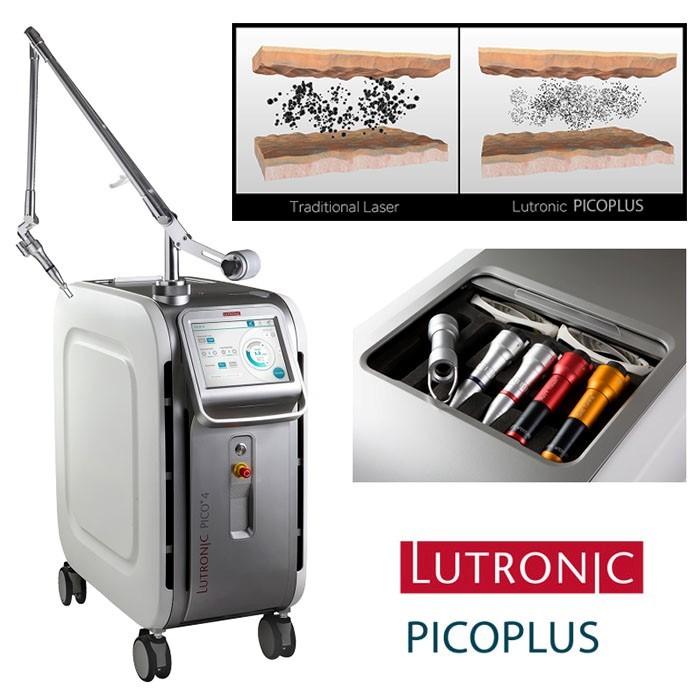
Pico lasers are one of the most advanced technologies used to treat pigmentation and sun damage. They deliver ultra-short pulses of laser energy that target melanin without harming surrounding skin tissue. When the pigment absorbs this energy, it is broken down into smaller particles, which are gradually cleared by the body’s immune system.
This process helps lighten:
- Sunspots
- Freckles
- Uneven pigmentation
- Age-related discoloration
One of the key advantages of Pico laser treatments is the minimal downtime. Most patients can return to daily activities immediately. While some improvement is visible after a single session, multiple treatments are usually recommended depending on the severity and depth of pigmentation.
Learn more about Pigment Lasers here
Learn more about PICO lasers here
Medical-Grade Topical Depigmentation Creams
TTopical depigmentation creams are an effective non-invasive option for treating pigmentation and sun damage. These medical-grade formulations contain clinically proven ingredients that help reduce melanin production, lighten existing pigmentation, and prevent new spots from forming.
Common active ingredients include:
- Hydroquinone – a well-known skin-lightening agent that inhibits tyrosinase, the key enzyme involved in melanin synthesis
- Tranexamic acid – reduces pigmentation by calming inflammation and blocking UV-induced melanocyte activity
- Arbutin – a plant-derived compound that gently suppresses melanin production
- Vitamin C – an antioxidant that brightens skin, reduces oxidative stress, and supports even skin tone
Topical depigmentation creams may be used on their own for mild to moderate pigmentation, or as part of a comprehensive treatment plan following laser therapy. Results typically develop gradually over several weeks of consistent use.
Learn more about our pigmentation creams →
Dull Skin Treatment in Singapore
Dull, tired-looking skin is a common concern among individuals experiencing early signs of aging. As cell turnover slows and environmental damage accumulates, the skin loses its natural radiance and may appear uneven, rough, or greyish. This lack of vibrancy is often due to a buildup of dead skin cells, reduced microcirculation, and diminished hydration levels in the dermis.
At our clinic, we offer several targeted treatments to restore skin luminosity, improve tone and texture, and boost overall skin clarity:
Pico Laser Toning
Using low-energy settings, Pico lasers can perform gentle laser toning to resurface the skin and stimulate collagen renewal without significant downtime. This helps to refine skin texture, reduce pigmentation, and brighten the overall complexion. It is especially suitable for patients with dull skin caused by sun exposure, uneven tone, or early signs of photoaging.
Skinboosters With NASHA™ Technology
These stabilised HA-based injectables hydrate the skin from within and improve skin texture, glow, and elasticity over time. By replenishing moisture and stimulating collagen production, they help to restore a fresh, dewy complexion, particularly in areas like the cheeks and lower face.
Biostimulatory Injectables
Treatments such as PN-based injectables (婴儿针) and hybrid PDLLA + HA injectables (素颜针) promote natural collagen synthesis and skin cell regeneration. These are ideal for improving skin clarity, tone, and texture in patients with signs of dullness, acne scarring, or textural irregularities.
Aquapure Medi-Facial
The Aquapure Medi-Facial is an advanced form of microdermabrasion facial that uses medical-grade serums and technology to promote younger, brighter, and glowing skin. This multi-step treatment includes:
- Aquapeel: Deeply cleanses by removing dead skin cells and impurities, revealing fresh, clean, and supple skin.
- Electroporation: Enhances the transdermal delivery of nutrients into the skin, improving hydration and nutrient absorption.
- Microcurrent: Stimulates circulation with a lifting and tightening effect, promoting elastin and collagen regeneration.
- Cooling/Heating: Cooling energy reduces fine lines and wrinkles while enhancing skin repair; heating energy firms and tones the skin.
This comprehensive facial system is designed to address various skin concerns, including dullness, dehydration, and uneven texture, resulting in a revitalised and radiant complexion.
Learn more about the Aquapure Medi-Facial here →
Dry or Dehydrated Skin Treatment in Singapore
Dry or dehydrated skin is a common concern that can affect individuals across all age groups. It often presents as tightness, flakiness, rough texture, or an overall lack of suppleness. Unlike oily skin, dehydration refers to a lack of water content in the skin — not oil — and is frequently overlooked or misdiagnosed.
With age, the skin’s ability to retain moisture declines due to reduced sebum production, impaired skin barrier function, and a breakdown in the natural lipid layer. Environmental stressors such as air-conditioning, frequent travel, harsh skincare, or over-cleansing can worsen dehydration.
At our clinic, we offer a range of effective solutions to replenish moisture levels and restore the skin’s natural barrier:
Injectable Moisturisers with 64mg HA
Known for their high hyaluronic acid concentration, these injectable moisturisers are designed to spread evenly across the dermal layers, improving hydration and skin density. This 逆時針 treatment provides deep and long-lasting moisturisation while also triggering bioremodelling for improved skin elasticity and texture.
Skinboosters
These stabilised HA-based injectables using NASHA™ technology work by attracting and retaining water within the dermis. Skinboosters help hydrate from within, smooth out fine lines, and restore softness and suppleness, especially in areas like the cheeks, lower face, and under-eye region.
Aquapure Medi-Facial
The Aquapure Medi-Facial combines deep cleansing with medical-grade hydration, making it ideal for dry, sensitive, or compromised skin. The Aquapeel step removes surface buildup, while electroporation enhances serum absorption. The treatment finishes with microcurrent and temperature therapy to promote barrier repair, calm irritation, and lock in moisture.
This non-invasive option is perfect for those seeking a gentle, hydrating refresh without downtime.
Home Skincare Support
For lasting results, we also recommend integrating hydrating skincare products with ingredients such as ceramides, niacinamide, and hyaluronic acid. These help reinforce the skin’s lipid barrier and reduce transepidermal water loss between treatments.
With proper hydration, the skin appears smoother, plumper, and more radiant — key features of youthful skin.
How Do I Find the Best Anti-Aging Treatments in Singapore?
With so many options available, choosing the right anti-aging treatment in Singapore can feel overwhelming. Every clinic offers different modalities, ranging from injectables to lasers, facials, and energy-based devices. The key is to find a clinic that provides doctor-led, personalised care based on your skin’s unique needs.
Look for a clinic with:
- Experience in managing a wide range of aging concerns, including wrinkles, sagging, pigmentation, and volume loss
- A comprehensive menu of evidence-based treatments, including botulinum toxin, skinboosters, collagen stimulators, and medical-grade facials
- Clear explanations of available procedures, treatment plans, and expected outcomes
- A strong track record of safety and natural-looking results
A proper consultation with an experienced medical aesthetic doctor will ensure that your treatment is customised, safe, and aligned with your aesthetic goals.